


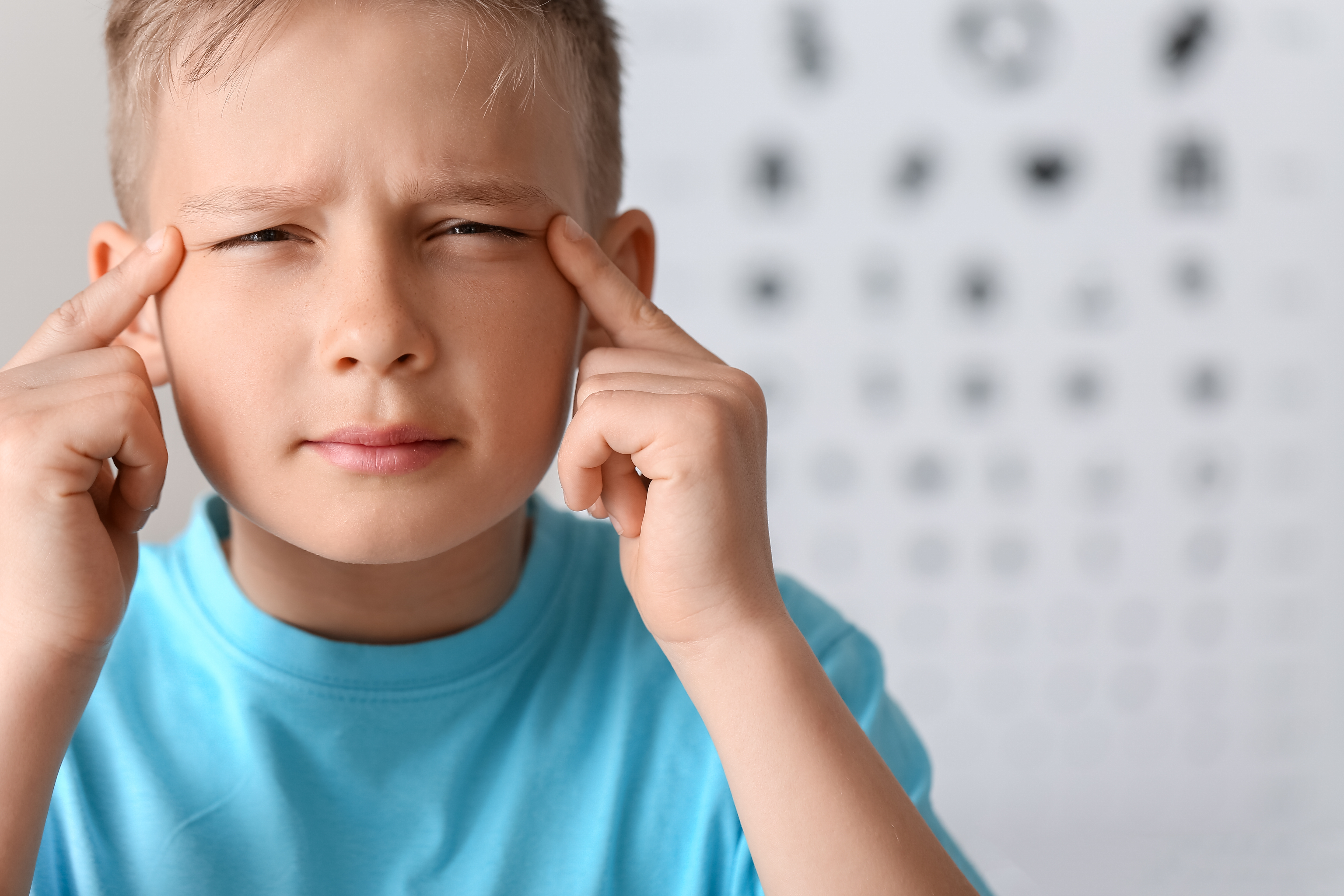
When your child starts squinting at the classroom board again, it may be easy to assume their glasses simply need an update. However, repeated prescription changes can be a sign of progressive myopia, or nearsightedness. Myopia often develops during childhood and can continue becoming stronger as the eyes grow.
For Winfield families, scheduling a comprehensive pediatric eye exam before the school year begins can identify vision changes early. At Central DuPage Vision Center, we evaluate children's vision and provide personalized myopia management when nearsightedness continues to progress.
Squinting temporarily changes how light enters the eye, which can make distant objects appear slightly clearer. A child who consistently squints at the board, television, street signs, or sporting events may be compensating for blurry distance vision.
Myopia commonly occurs as the eye grows longer than expected, causing distant images to focus incorrectly. Children often do not recognize that their vision has changed because the blur can develop gradually.
A child who saw clearly during their previous eye exam may still experience significant changes before the next school year.
Winfield parents should pay attention to everyday behaviors that suggest distance vision is becoming less clear:
These behaviors can have several causes, so a comprehensive eye exam is necessary to determine whether myopia or another vision problem is responsible.
School screenings provide a useful first check, but they do not replace a comprehensive pediatric eye exam. A screening typically focuses on whether a student can meet a certain level of visual acuity at the time of testing.
A comprehensive exam gives us a more detailed understanding of your child's prescription, eye health, focusing ability, and overall visual function. It also allows us to compare current findings with previous prescriptions to determine whether nearsightedness is progressing.
Scheduling an exam before Winfield classes become busy gives families time to update glasses or discuss additional treatment before homework, sports, and extracurricular activities increase.
If your child's myopia continues to progress, repeatedly updating standard glasses may provide clear vision without actively slowing the underlying progression.
Myopia management is designed to reduce how quickly nearsightedness becomes stronger. Central DuPage Vision Center offers several personalized treatment options in Winfield, including prescription eye drops, MiSight 1 day contact lenses, overnight orthokeratology lenses, and Stellest myopia management eyeglass lenses.
The appropriate option depends on your child's age, prescription, eye health, maturity, lifestyle, and previous rate of change. Some children prefer glasses, while others benefit from daytime or overnight contact lens options.
Myopia management does not permanently cure nearsightedness, and children still need regular eye exams. The goal is to slow progression while the eyes are developing instead of waiting for the prescription to become significantly stronger.
Starting early also allows us to monitor changes and adjust the treatment plan as your child grows. For students who need contact lenses or Ortho-K, beginning before the new school year provides time to learn proper handling, establish a routine, and become comfortable with treatment.
Clear distance vision supports more than seeing the board. It affects sports, classroom participation, recognizing faces, navigating school, and everyday confidence.
Schedule your child's comprehensive eye exam and myopia evaluation with Central DuPage Vision Center at 27W185 Geneva Road, Winfield, IL 60190. Call (630) 349-4948 to book an appointment before the new school year begins.

© 2026 Central DuPage Vision Center. All rights Reserved. Accessibility Statement - Privacy Policy - Sitemap
Powered by: