


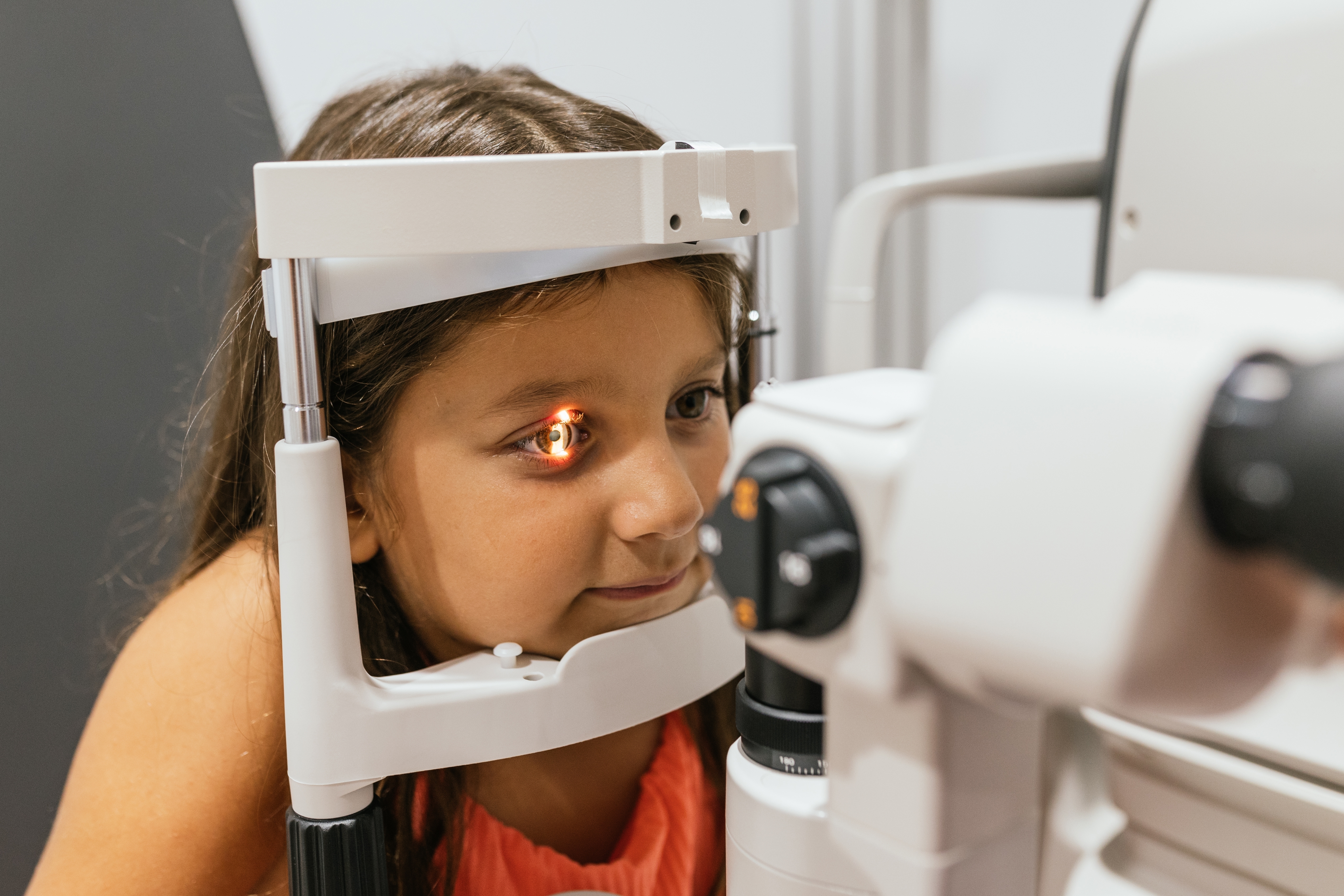
When a child is diagnosed with myopia, or nearsightedness, standard eyeglasses are often the first step. They help distant objecee the board at school, play sports, and move through daily activities. However, regular single-vision glasses primarily correct blurry vision. They do not actively address the eye growth that causes childhood myopia to worsen.
At Central DuPage Vision Center, we take a proactive approach to myopia management. Our goal is not only to help children see clearly today, but also to slow prescription changes and support their long-term eye health.
Myopia usually develops when the eye grows too long from front to back. This causes light to focus in front of the retina instead of directly on it. Because children's eyes are still developing, their nearsightedness can continue progressing as they grow.
A stronger prescription may improve vision each year, but it does not necessarily slow the underlying progression. Higher levels of myopia are associated with a greater lifetime risk of eye conditions such as retinal detachment, glaucoma, and myopic macular disease. Starting myopia management early can help reduce how quickly the prescription changes.
Traditional kids' eyeglasses provide clear distance vision. Myopia management uses specialized treatments designed to influence how the eyes focus light or how quickly they lengthen.
Depending on a child's age, prescription, eye health, maturity, and lifestyle, treatment may include:
• Ortho-K lenses worn overnight to gently reshape the cornea and provide clearer daytime vision
• MiSight 1 day or other specially designed daytime contact lenses that correct vision while helping slow progression
• Prescription eye drops used at bedtime for children who may not be ready for contact lenses
• Stellest lenses that look like standard eyeglasses but use specialized lens technology to manage myopia
These options are not interchangeable for every child. A comprehensive evaluation helps us determine which approach best matches the child's needs and the family's routine.
Myopia management is an ongoing process, not a one-time prescription. Regular visits allow us to monitor vision changes, evaluate eye growth, check treatment performance, and adjust the plan when needed.
Parents should schedule an eye exam if a child frequently squints, sits close to screens, struggles to see distant objects, or needs stronger glasses each year. Children with one or two nearsighted parents may also have a greater chance of developing myopia.
Standard eyeglasses remain important because children need clear, comfortable vision. For a child with progressing myopia, however, clear vision is only part of the goal. A personalized myopia management plan can address both today's prescription and how the eyes are changing over time.
Schedule a pediatric eye exam with Central DuPage Vision Center to learn more about myopia management and which treatment is right for your child. Visit our office in Winfield, Illinois, or call (630) 349-4948 to book an appointment today.

© 2026 Central DuPage Vision Center. All rights Reserved. Accessibility Statement - Privacy Policy - Sitemap
Powered by: